

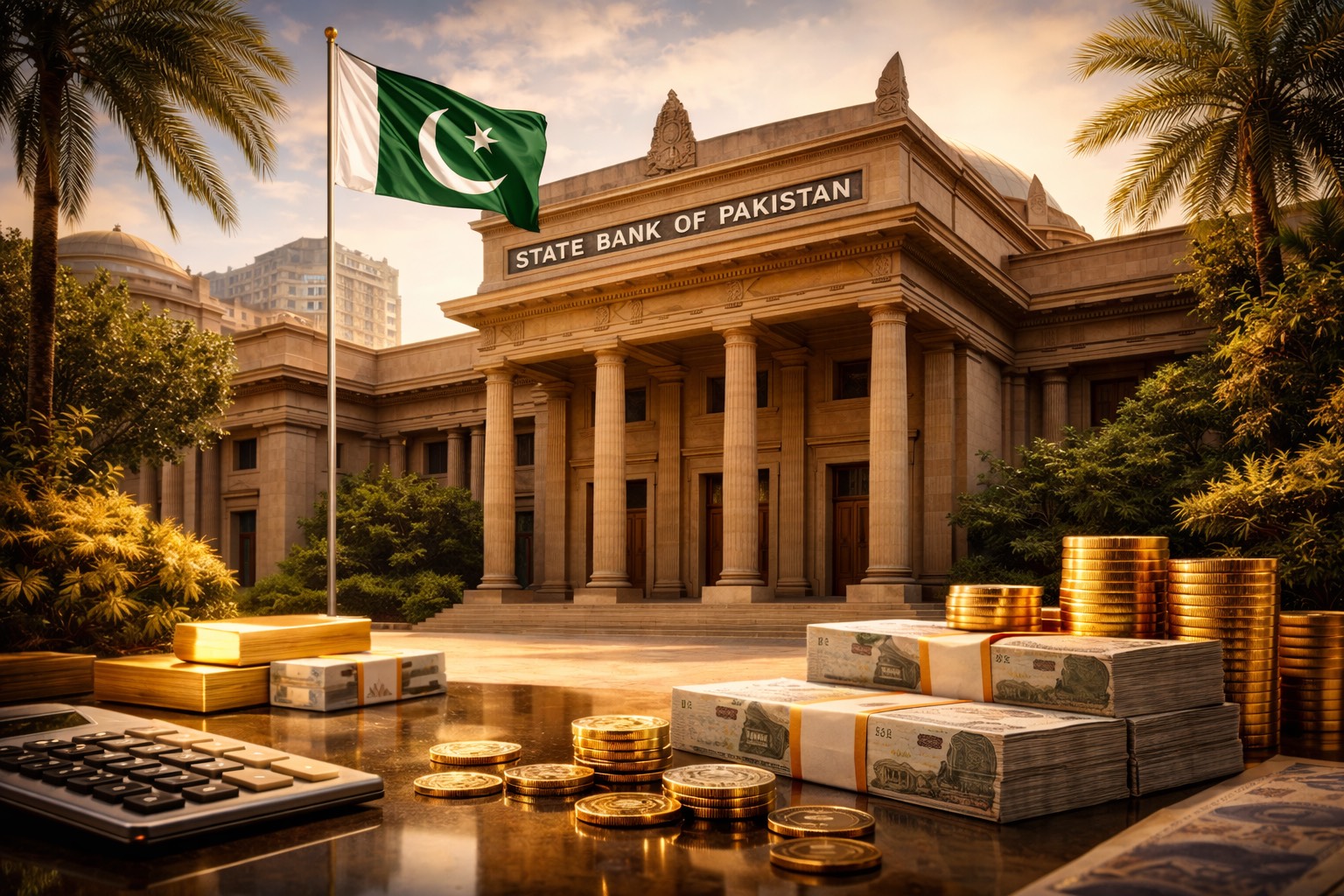
KARACHI: Pakistan’s central bank on Monday left its key policy rate unchanged at 10.5 percent, saying inflation trends and external balances remain broadly stable while economic growth shows signs of recovery.
The decision was taken at the State Bank of Pakistan’s Monetary Policy Committee (MPC) meeting, where officials said maintaining the current rate would support price stability and sustainable growth.
In its policy statement, the SBP said headline inflation stood at 5.6 percent in December, while core inflation remained elevated at around 7.4 percent. The current account posted a $244 million deficit in December, taking the shortfall to about $1.2 billion in the first half of FY2026.
The central bank noted that weaker food exports, particularly rice, weighed on external accounts, although higher workers’ remittances and growth in ICT services helped limit the overall deficit.
Provisional data showed real GDP expanded by 3.7 percent year on year in the first quarter of FY2026, led by industry and agriculture. Large-scale manufacturing recorded solid growth in October and November, lifting overall output during the July–November period.
Based on recent trends, the MPC revised its full-year growth projection to between 3.75 and 4.75 percent for FY2026.
The SBP also reported improved consumer and business confidence, alongside easing inflation expectations. Foreign exchange reserves reached $16.1 billion by mid-January, supported by central bank purchases in the market.
Looking ahead, the MPC expects continued remittance inflows and favorable global commodity prices to keep the current account deficit within 0 to 1 percent of GDP this fiscal year. Reserves are projected to exceed $18 billion by June 2026, although risks remain from global trade uncertainty and geopolitical developments.
On the fiscal side, the committee flagged slower tax revenue growth and said stronger collections will be required in the second half of the year to meet budget targets.
Private sector credit also picked up, driven by textiles, trade, chemicals and consumer financing. To support lending, the SBP announced a reduction in the average cash reserve requirement from 6 percent to 5 percent.
The MPC said a coordinated monetary and fiscal policy framework, alongside structural reforms, remains essential to strengthen exports and ensure long-term economic stability.